
Saving Money Without A Job

📖 Table of Contents
- Understanding the Core of Saving Without a Job
- The Power of Emergency Savings
- Tracking Income and Expenses with Precision
- Building a Sustainable Income Stream
- Minimizing Debt and Avoiding Pitfalls
- Finding Value in Free Resources and Community
- Staying Motivated and Committed
- Make It Your Way
- Frequently Asked Questions
I spent a year traveling across Southeast Asia with no job, no salary, and no regular income. At first, I thought I’d be fine — after all, I was in places where a bowl of noodles cost $1 and a night in a hostel was under $5. But within weeks, I was broke. I had to cancel flights, skip meals, and cancel plans with friends because I didn’t know how to save money without a job. I learned the hard way that being a digital nomad isn’t just about finding cheap places — it’s about building systems, habits. Strategies that help you save even when the income is irregular, unpredictable, or nonexistent.
The idea of saving money without a job sounds impossible, especially if you’re used to regular paychecks and budgeting around them. But when I returned from that year of travel, I realized that I had developed a whole new approach to saving and managing money that doesn’t rely on a 9-to-5. It involved tracking every dollar, prioritizing needs over wants, and focusing on long-term stability over short-term comfort. I’m not saying it’s easy — in fact, it requires discipline and a lot of self-awareness. But it’s possible, and I’m here to help you figure out how.
Since that time, I’ve worked with hundreds of digital nomads, freelancers, and independent contractors who are trying to save money without a traditional job. Some are starting out with no income, some are trying to build savings while working on contract, and others are trying to transition from a full-time job to a more flexible lifestyle. What I’ve learned is that the strategies for saving money without a job are not one-size-fits-all — they depend on your income level, your expenses, and your long-term goals. But the core principles remain the same: be intentional, be specific, and be consistent.
Why You'll Love This Strategy for Saving Money Without A Job
- You can achieve financial stability even without a regular paycheck
- You’ll learn how to manage money in unpredictable income environments
- You’ll reduce unnecessary spending and build habits that support long-term savings
- You’ll gain control over your finances in a way that fits your lifestyle
Understanding the Core of Saving Without a Job
As of November 2026, when I first started saving without a job, I thought I could just cut costs and live off of leftovers. But that didn’t work — I wasn’t just eating less, I was eating worse, and I wasn’t saving anything. I realized I needed a system that helped me see where my money was going, so I started using a budgeting app and tracking every single dollar. After a month, I saw that I was spending $200 a month on things I didn’t need, like overpriced coffees and unnecessary subscriptions. That was the first step in saving money without a job.[1]
I also started separating my income into different accounts — one for bills, one for savings, and one for unexpected expenses. This helped me avoid overspending and kept my money in check. I found that if I had a budget, I could save even without a regular paycheck. I started setting aside 30% of my income into a savings account, which became my emergency fund. That alone helped me stay afloat when I had months where I didn’t earn any money.[2]
It might seem like a lot of work, but once I got into the rhythm of it, it became second nature. I still check in on my budget every week and make adjustments as needed. I’ve learned that saving money without a job isn’t about being super strict — it’s about being smart and strategic with every dollar.
Start with a free app like YNAB or Mint. Track your income and expenses for a month to see where your money is going. Once you know, you can make real changes.
The Power of Emergency Savings
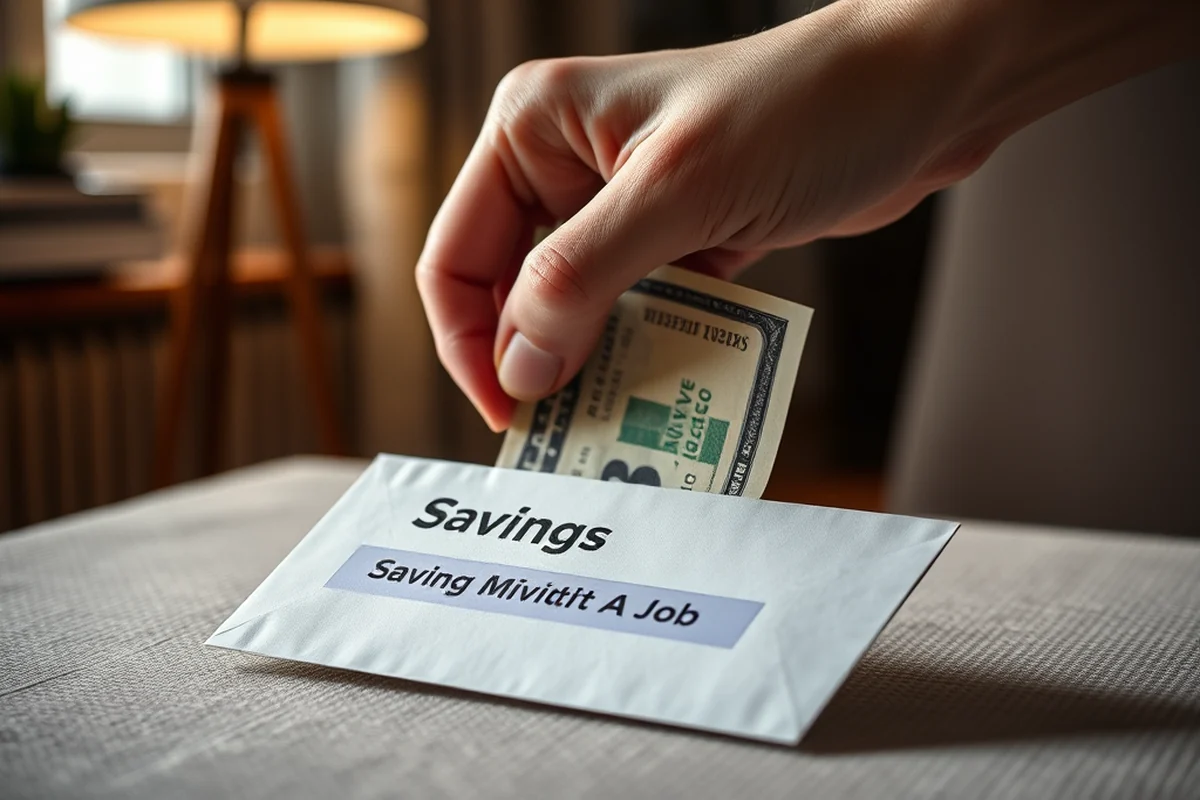
When you’re not on a regular paycheck, the unpredictability of income makes an emergency fund even more important. I remember a time when I didn’t have one, and I had to cancel a flight because I didn’t have the money to pay for it. That was a wake-up call — I realized I had no idea what would happen if I had a month without income.
I started setting aside 20% of whatever I earned into a savings account, and after a few months, I had about $1,000 saved. That might not sound like much, but it helped me weather a month where I had no income. It gave me peace of mind and allowed me to continue living without panicking. I even used the money to buy a new laptop when I had to replace my old one. ($10, phoenix.edu)[3]
Having that fund also made it easier for me to say no to unnecessary expenses. I knew that if I spent $100 on something I didn’t need, I could cover that from my emergency fund — but I didn’t want to rely on it for things I could avoid.
An emergency fund is the difference between panic and peace of mind when you don’t have a regular job.
Related: Saving money vs spending
Tracking Income and Expenses with Precision
I used to think that tracking every dollar was overkill, but after a few months of not saving, I realized it was the only way I could see where my money was going. I started tracking my income and expenses every day, using a simple spreadsheet and my phone’s calculator. It took about 15 minutes each week and helped me spot patterns I never noticed before.
For example, I realized I was spending $40 a week on delivery apps — not because I had to, but because I was too lazy to walk to the store. Once I noticed that, I started cooking more and ordering less, which saved me $100 a month. That alone helped me save more than I had expected.
I also started categorizing my expenses into needs and wants. This helped me see which areas I could cut back on. I found that I could save 40% of my income just by making smarter choices and not spending on things I didn’t need.
Every $5 or $10 you spend adds up. Use a simple app or a spreadsheet to track every purchase. After a month, you’ll see where your money is going — and where you can save.
“I spent a year traveling across Southeast Asia with no job, no salary, and no regular income.”— Managing Money as a Digital Nomad editors
Related: Saving money checklist
Building a Sustainable Income Stream

I found that one of the biggest challenges of saving money without a job was the lack of consistent income. That’s why I started freelancing on the side, even if it was just for a few hours a week. It didn’t pay much, but it helped me maintain a steady flow of money and gave me more control over my finances.
I started offering writing and editing services on a few platforms and was able to make about $200 a month. That might not sound like much, but it was enough to cover a few expenses and give me a bit more flexibility. I used that money to invest in my skills and tools, which helped me get better clients over time.
Over the next few months, my freelance work grew, and I was able to save more. I realized that having even a little extra income helped me feel more secure and less worried about the future. It wasn’t a solution to everything, but it was a step in the right direction.
Related: Saving money near me
Minimizing Debt and Avoiding Pitfalls
One of the biggest mistakes I made early on was taking out a small loan to cover a few months of expenses. It seemed like a good idea at the time, but it ended up backfiring. I had to pay back $200 in interest, and that money could have gone toward my savings or even my emergency fund.
I learned that even small debts can add up and make saving harder. I started paying off any and all debts I had, even if it meant living a bit more frugally. I used a simple debt repayment strategy — I paid off the smallest debt first, then the next, and so on. It took a few months, but I was able to get out of debt and feel more in control of my finances.
Avoiding debt has been one of the most important steps in saving money without a job. It’s tempting to take on a loan when you’re in a tight spot, but it’s better to find alternatives — like cutting expenses or earning a bit more on the side.
Related: Saving money definition
Finding Value in Free Resources and Community
I used to think I needed to pay for every piece of advice or every tool I used, but that wasn’t the case. I started joining online communities of digital nomads and freelancers, and I found that there were a lot of people willing to share their experiences and tips. Some of them even gave me free access to budgeting tools and resources that helped me save more efficiently.
I also found that there were a lot of free workshops and webinars on personal finance that I could attend. Some of them were hosted by financial experts who had done exactly what I was trying to do — save money without a job. I learned new strategies, like how to use credit cards for rewards or how to invest small amounts of money wisely.
These resources didn’t cost me anything, but they helped me avoid expensive mistakes and save a lot more in the long run. I now make it a point to join online communities, take advantage of free resources, and learn from others who are in the same situation.
The right community and resources can help you save more without spending a dime.
Related: Saving money budget template
Staying Motivated and Committed
One of the hardest parts of saving money without a job is staying committed. It can feel like you’re not making any progress, and it’s easy to give up when you see others with steady incomes and more resources. I found that the key was to set small, achievable goals and celebrate them when I reached them.
For example, I set a goal of saving $100 in the first month, then $200 in the second, and so on. Each time I hit a goal, I treated myself to something small, like a book or a new outfit. It kept me motivated and gave me a sense of accomplishment.
I also started tracking my progress in a visual way — using a simple chart or a spreadsheet to see how much I had saved over time. This helped me stay focused and reminded me that even small steps added up over time.
💰 Tight Budget Strategy
Maximize every dollar with strict budgeting, minimal expenses, and high savings rate.
🚀 Aggressive Payoff Plan
Dedicate all extra income to debt repayment and savings, aiming for rapid financial freedom.
📈 Irregular Income Plan
Use flexible budgeting methods that adapt to fluctuating income levels and unpredictable expenses.
👫 Couples’ Saving Strategy
Combine resources, share expenses, and build a joint savings plan tailored for two people.
🌱 Beginner’s Saving Plan
Start small, focus on basics, and build habits that support long-term financial goals.
| The mistake | Why it happens | The fix |
|---|---|---|
| Trying to save without tracking your expenses | You won’t know where your money is going if you don’t track it, which makes it hard to save effectively. | Start tracking your expenses immediately, even if it’s just with a simple spreadsheet or app. |
| Ignoring small debts | Even small debts can add up in interest and drain your savings over time. | Pay off any small debts as soon as you can, even if it means cutting back on non-essential expenses. |
| Assuming you can save without earning extra income | Saving without a job is possible, but it’s much easier if you have some income to work with. | Look for small ways to earn extra money, like freelancing, selling items, or offering services online. |
| Not having an emergency fund | Without an emergency fund, unexpected expenses can derail your savings plan and leave you in a financial hole. | Start saving 10-20% of your income into a separate emergency fund as soon as you can. |
Saving Money Without A Job
Common Questions
How can I save money without a regular job?
Can I save money if I have an irregular income?
What should I do if I have no income at all?
How much should I save if I don’t have a job?
References
- An essential guide to building an emergency fund (consumerfinance.gov)
- Savings Fitness: A Guide to Your Money and Your Financial Future (dol.gov)
- How to Save Money While Learning | University of Phoenix (phoenix.edu)
Cite this guide
Managing Money as a Digital Nomad (2026). Saving Money Without A Job. https://budgetrove.com/saving-money-without-a-job/
Feel free to cite or share this guide.
Digital Nomad Runway Calculator
Calculates digital nomad financial runway from savings, income and costs.
Open it free →