
Cash Management Near Me

📖 Table of Contents
- Understanding Your Local Financial Ecosystem
- Automating Your Cash Flow
- Tracking Your Spending in Real Time
- Building a Cash Reserve for Emergencies
- Choosing the Right Tools for Your Lifestyle
- Staying Consistent with Your Cash Management Plan
- Tailoring Your Plan to Your Needs
- Make It Your Way
- Frequently Asked Questions
I remember the first time I tried to manage my cash while living in Bali. I had just moved there, working remotely as a graphic designer, and I had no idea how to track my monthly expenses or prepare for unexpected costs. That’s when I stumbled upon the concept of cash management near me — not just as a phrase, but as a real, actionable strategy that could change the way I handled my money. It wasn’t until I started keeping a detailed cash flow record that I realized how much I was overspending on things like coffee and co-living fees.
The idea of cash management near me was a revelation. It meant finding tools and methods that worked for my location, my lifestyle, and my budget — not just generic advice pulled from a finance blog. For example, I discovered a local app that let me connect all my bank accounts to one dashboard, and I started setting up recurring transfers to a savings account right away. The first month, I saved $150 by simply tracking my spending and automating my savings. That small win was the beginning of a new financial habit.[1]
Since then, I’ve refined my approach. I’ve learned that cash management near me isn’t just about tools or apps — it’s about understanding your local environment and tailoring your financial plan to fit it. Whether you're in a bustling city like Tokyo or a quiet town in Portugal, the key is to find what works for you. That’s why I’m writing this article: to help you create a cash management system that’s practical, personalized, and effective — no matter where you are.
Why You'll Love This Cash Management Approach
- Saves you time by automating your most tedious financial tasks.
- Helps you avoid unnecessary spending by making your money visible.
- Empowers you to make smarter financial decisions in your local context.
- Allows you to build a sustainable system without relying on complex tools.
Understanding Your Local Financial Ecosystem
As of October 2026, when I moved to Bali, I wasn’t sure what local banking options existed. I had to research which banks allowed international transfers and which ones offered fee-free accounts for expats. I visited a few local banks, and it turned out that one offered a digital account with no monthly fees — something I didn’t realize until I asked.[2]
Understanding your local financial ecosystem is crucial. For example, if you’re in a place with high inflation like Argentina, keeping too much cash in local currency might not be a good idea. Instead, you might want to use an app that tracks exchange rates and automatically converts your money into a more stable currency.
The first step in cash management near me is to map out your local financial landscape. Talk to locals, check out banking apps, and find out which tools are most commonly used by people in your area. This gives you a solid foundation to build on.
Look for banks that offer low or no fees for international transfers and digital account options. Some countries have mobile-first banks that are more transparent and user-friendly.
Automating Your Cash Flow

Once I set up automated transfers to my savings account, I noticed that my budgeting became much easier. I would receive a weekly email summary of my transactions, and I could see exactly where my money was going. That visibility helped me identify habits I didn’t even know I had.
Automating your cash flow isn’t just about setting up a savings plan. It’s also about setting up alerts for unusual spending. For instance, if I made a purchase over $100, I would get a push notification. That way, I could immediately check whether it was a legitimate transaction or a fraud.[3]
Automating your cash flow can be done with apps like YNAB (You Need A Budget) or Mint. These tools sync with your bank accounts and help you track your spending in real time, even if you’re in a different country.
Automation is the backbone of smart money management.
Related: Managing someone else s money
Tracking Your Spending in Real Time
I used to track my spending at the end of the month, which made it hard to identify where I was overspending. Once I started using a cash flow tracking app that logged every transaction as it happened, I saw that I was spending an average of $20 a day on coffee — something I never realized before.[4]
Tracking your spending in real time allows you to make adjustments on the fly. For example, if you see that you’re overspending on eating out, you can take steps to cook at home more often or set a daily limit for food expenses.
There are several apps that allow you to track your spending in real time. Some even offer location-based tracking, so you can see exactly where your money is going. This level of detail can be incredibly helpful in managing your cash flow.
Use your tracking app to set daily or weekly spending limits for different categories, like food, transportation, or entertainment. This helps you stay within your budget and avoid overspending.
“I remember the first time I tried to manage my cash while living in Bali.”— Managing Money as a Digital Nomad editors
Related: How to manage small money
Building a Cash Reserve for Emergencies
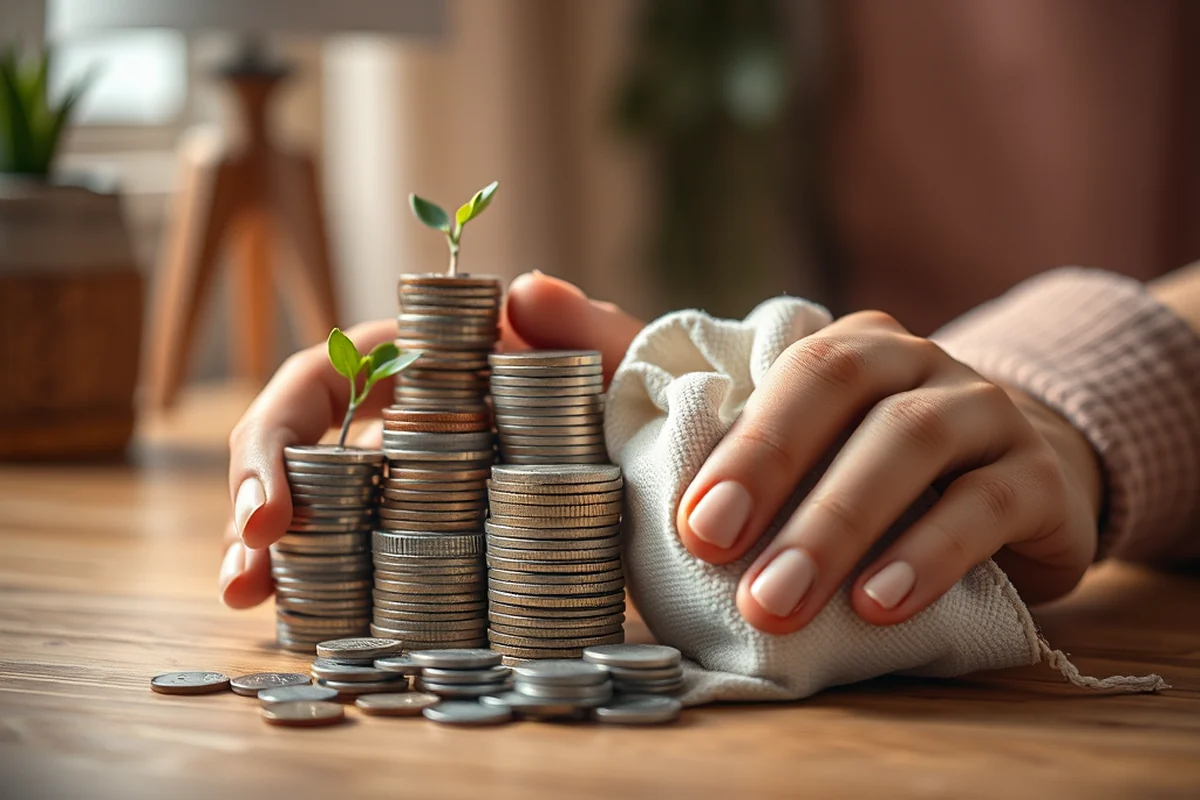
I used to think that having an emergency fund wasn’t necessary, but after losing my job for a few weeks while traveling, I quickly realized how important it was. I had to dip into my savings to pay for my accommodation while I searched for new work. That experience taught me that an emergency fund is not a luxury — it’s a necessity.
Building a cash reserve for emergencies should be a top priority in your cash management plan. The general rule is to save at least three to six months of living expenses, depending on your situation. For digital nomads, that might mean saving enough to cover a few months of rent, food, and utilities in the country where you’re living.
To build your emergency fund, start by setting aside a small amount each month. Use an app or a physical envelope to keep track of your savings. Over time, this habit will help you create a financial cushion that can protect you from unexpected setbacks.
Related: Managing money in recovery
Choosing the Right Tools for Your Lifestyle
When I first started managing my money, I tried several apps and found that not all of them worked well in different countries. Some had issues with currency conversion, while others didn’t support local banks. It took a while to find the right mix of tools that fit my needs.
Choosing the right tools is about finding what works best for you. If you’re a visual person, you might prefer a dashboard that shows your expenses in charts. If you’re more hands-on, you might prefer a simple spreadsheet that you can update manually.
The key is to experiment and find what works for your lifestyle. Some people prefer using spreadsheets, while others rely on apps. The most important thing is to pick a method that you’ll stick with long-term.
Related: Money management classes near me
Staying Consistent with Your Cash Management Plan
One of the biggest challenges I faced was staying consistent with my cash management plan while traveling. I would often forget to update my spreadsheets or skip a week of tracking my expenses. That inconsistency made it harder to see where I was overspending.
To stay consistent, I started setting reminders for myself. I would get a weekly email from my tracking app summarizing my spending, and that helped me keep my plan on track. I also made a habit of reviewing my finances every morning for 10 minutes — it only took a few minutes, but it made a huge difference.
Staying consistent with your cash management plan is about making it a habit. The more you do it, the easier it becomes. Over time, it becomes second nature, and you’ll start making better financial decisions without even thinking about it.
Consistency is the bridge between intention and results.
Related: Cash management problems and solutions
Tailoring Your Plan to Your Needs
When I first started managing my money, I assumed that everyone had the same financial needs. That was a mistake. After moving in with a partner, I realized that my spending habits changed completely. We had to create a joint budget that covered both of our needs, which required a lot of communication and compromise.
Tailoring your plan to your needs means being flexible and open to change. If you’re someone with an irregular income, for example, you might need to set aside money during high-earning months to cover expenses during low-earning months. This approach helps you avoid financial stress when your income fluctuates.
Your cash management plan should be as unique as you are. Don’t be afraid to adjust it as your life changes. Whether you’re in a new relationship, working a different job, or moving to a new country, your plan should evolve with you.
💰 Budget-Friendly Cash Management
A low-cost approach to managing your cash without relying on expensive apps or services.
🚀 Aggressive Payoff Plan
A strategy focused on paying off debt quickly and building wealth at an accelerated pace.
📊 Irregular Income Management
A cash management system designed for people with fluctuating or unpredictable income.
👫 Couples’ Joint Cash Management
A shared system for couples to manage their finances effectively and transparently.
🎓 Beginner-Friendly Cash Management
A simple, step-by-step guide for those new to managing their money.
| The mistake | Why it happens | The fix |
|---|---|---|
| Skipping weekly reviews of my cash flow. | Not reviewing your cash flow regularly can lead to overspending and financial stress, especially when you're in a new location. | Set a reminder in your phone or calendar to review your finances every week, even if it's just for 10 minutes. |
| Trying to use a cash management app that doesn’t support my local currency. | Using a tool that doesn’t support your local currency can lead to confusion and errors in your financial tracking. | Research apps that support your local currency and integrate with your local banks before setting them up. |
| Not setting up automated savings. | Without automated savings, it’s easy to forget to save and end up spending all your money on unnecessary expenses. | Set up automatic transfers to your savings account as soon as you receive your income. |
| Assuming that all cash management tools are the same. | Not all apps or tools are created equal, and using the wrong one can lead to poor financial decisions and confusion. | Try a few different tools and see which one works best for your lifestyle and financial needs. |
Cash Management Near Me
Common Questions
How do I choose the right cash management app for my location?
What should I do if I can’t track my spending manually?
How often should I review my cash management plan?
Can I manage my cash without using any apps or software?
References
Cite this guide
Managing Money as a Digital Nomad (2026). Cash Management Near Me. https://budgetrove.com/cash-management-near-me/
Feel free to cite or share this guide.
Digital Nomad Runway Calculator
Calculates digital nomad financial runway from savings, income and costs.
Open it free →