
Saving Money Kit

📖 Table of Contents
- What is a 'Saving Money Kit' and Why You Need One
- Step 1: Choose the Right Financial Tools
- Step 2: Create a Budget That Works for You
- Step 3: Automate Your Savings and Bills
- Step 4: Track Your Spending and Adjust as Needed
- Step 5: Set Financial Goals and Stay Motivated
- Step 6: Review and Refine Your System Regularly
- Make It Your Way
- Frequently Asked Questions
The day I moved to Chiang Mai with $3,000 in my savings account, I had no idea how quickly that number would shrink. Between rent, groceries, and the constant need for backup plans, I found myself struggling to keep up. That’s when I started building my first 'saving money kit' — a system of tools and habits that helped me not only survive but actually thrive as a digital nomad. It wasn’t about spending less; it was about spending smarter and knowing exactly where my money was going at all times.[1]
I spent six months tweaking my budget, tracking every dollar, and experimenting with different apps and strategies. What I discovered was that a 'saving money kit' isn’t just a list of accounts or software — it’s a mindset, a toolkit, and a way of life. It’s about making conscious choices and creating systems that help you stay on track even when life throws you a curveball. Whether you're new to the nomadic lifestyle or have been traveling for years, this guide will give you the blueprint to build a kit that works for your unique situation.
The best part? I didn’t need a huge income or a perfect budget to make this work. What I did need was a clear plan, the right tools, and the discipline to stick with it. Over time, I learned to automate savings, cut unnecessary expenses, and find ways to earn extra income while on the road. This article is my attempt to share exactly how I did it — with real numbers, real apps, and real results that you can apply to your own journey.
Why You'll Love This Saving Money Kit
- It gives you complete visibility over your finances, even while traveling.
- It’s easy to set up and maintain, with minimal effort required.
- It helps you build a financial buffer for emergencies and future goals.
- It’s adaptable to any lifestyle, income level, or location.
What is a 'Saving Money Kit' and Why You Need One
As of October 2026, when I first started traveling, I had no idea where my money was going. I’d look at my bank statement and feel like I was always short on cash. That’s when I realized I needed a 'saving money kit' — a personalized system that would help me track my spending, set financial goals, and automate savings. It was the first step toward financial independence as a digital nomad.
This kit isn’t about strict budgets or cutting out all fun. It’s about making informed choices and building a sustainable financial plan that works for your lifestyle. Whether you’re on a $1,000-a-month budget or earning six figures, this system can be tailored to your needs.[2]
The key is to make it simple and actionable. You don’t need to spend hours on spreadsheets or complicated apps. The goal is to create a system that works with your life — not against it.
Download apps like YNAB or Mint to get a clear picture of where your money is going. Set a limit of $100 for the first month to test the waters.[3]
Step 1: Choose the Right Financial Tools
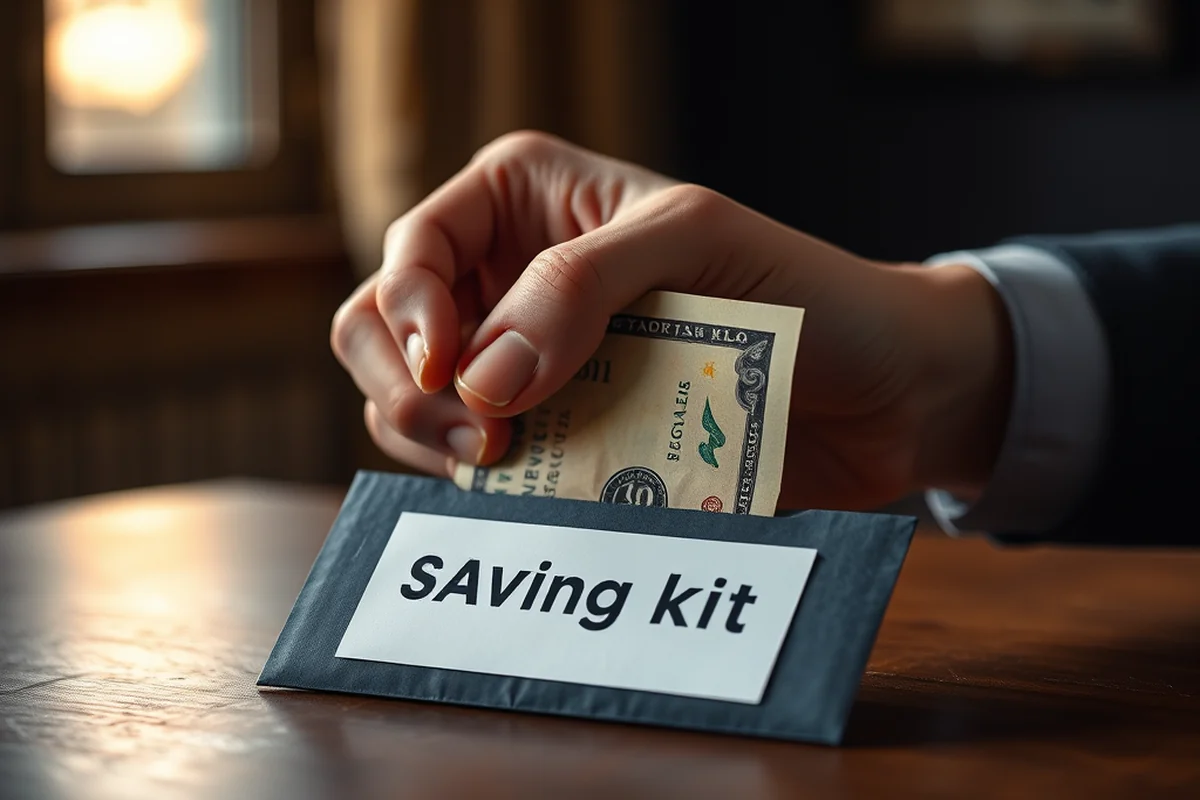
The first step in building your 'saving money kit' is choosing the right financial tools. This includes a budgeting app, a savings account, and a way to track your expenses. I use YNAB as my main budgeting tool because it forces me to plan ahead and allocate every dollar to a specific category.
For savings, I have a high-yield savings account that automatically transfers money from my checking account each week. This way, I’m saving before I even get the chance to spend it. I’ve been using this strategy for over a year, and it’s helped me build a six-month emergency fund.
Don’t forget about investment apps like Robinhood or Betterment. These are great for long-term savings and growing your money while you’re on the move. Even a small amount can add up over time.
Choose tools that make your life easier, not harder.
Related: Saving money budget expenses
Step 2: Create a Budget That Works for You
Creating a budget is the next step in building your 'saving money kit'. This is where you decide how much money you’ll spend on rent, food, travel, and savings. I use the 50/30/20 rule — 50% for needs, 30% for wants, and 20% for savings and debt.[4]
I track my expenses daily using my budgeting app and adjust my spending as needed. For example, if I spend too much on food in one month, I’ll cut back on other areas like entertainment or travel. This helps me stay within my budget and avoid overspending.
Budgeting doesn’t have to be rigid. It should be flexible enough to accommodate changes in your lifestyle or income. The key is to stay consistent and make adjustments as needed.
Your budget should be a living document. Review it every month and make changes based on your spending habits and financial goals.
“The day I moved to Chiang Mai with $3,000 in my savings account, I had no idea how quickly that number would shrink.”— Managing Money as a Digital Nomad editors
Related: Saving money budget
Step 3: Automate Your Savings and Bills

Automating your savings and bills is one of the most powerful steps you can take in building your 'saving money kit'. I set up automatic transfers from my checking account to my savings account each week. This way, I’m saving money before I even get the chance to spend it.
I also automate my bill payments — rent, utilities, and insurance. This helps me avoid late fees and ensures that I’m always on top of my payments. I’ve been doing this for over a year, and it’s helped me save thousands of dollars in late fees and interest.
Automation doesn’t take away your control — it just makes it easier to stay on track. You can still choose how much to save and where to send the money. The key is to set it up once and forget about it.
Related: Managing personal budget
Step 4: Track Your Spending and Adjust as Needed
Tracking your spending is a crucial part of your 'saving money kit'. It helps you understand where your money is going and where you can cut back. I use my budgeting app to track every expense, from coffee to groceries to travel.
I review my spending every week and make adjustments as needed. For example, if I’m spending too much on takeout, I’ll cut back and cook more at home. This helps me stay within my budget and avoid overspending.
Tracking your spending doesn’t have to be time-consuming. It just needs to be consistent and accurate. The more you track, the better you’ll understand your spending habits and where you can make changes.
Related: Saving money cost of living
Step 5: Set Financial Goals and Stay Motivated
Setting financial goals is the final step in building your 'saving money kit'. These goals will help you stay motivated and on track with your savings. I set short-term goals, like saving for a new laptop or a travel trip, and long-term goals, like buying a home or retiring early.
I use my budgeting app to track my progress toward these goals and make adjustments as needed. For example, if I’m not saving enough, I’ll cut back on other areas to meet my goal. This helps me stay on track and reach my financial goals faster.
Financial goals give you a sense of purpose and direction. They help you stay focused and motivated, even when life gets busy. The key is to set realistic goals and make progress toward them every day.
Goals give you a reason to save — even when the road is long.
Related: Saving money with kids
Step 6: Review and Refine Your System Regularly
Reviewing and refining your 'saving money kit' is essential for long-term success and adaptability. I review my system every month and make changes based on my spending habits and financial goals. This helps me stay on track and make adjustments as needed.
I also review my budget and spending patterns every three months to see if there are any areas where I can cut back or improve my savings. For example, if I’m spending too much on travel, I might cut back on other areas to save more.
Refining your system doesn’t mean starting over. It means making small adjustments to improve your results. The key is to stay flexible and make changes as needed.
💸 Tight Budget
This plan is ideal for travelers on a very limited income. It focuses on cutting costs, maximizing savings, and living within your means.
🎯 Aggressive Payoff
Designed for those who want to pay off debt or save aggressively. It includes tools for tracking debt, automating savings, and increasing income.
💰 Irregular Income
This variation is for travelers with unpredictable income. It helps you save consistently even when your earnings fluctuate.
👫 Couples
This plan is tailored for couples traveling together. It includes shared accounts, joint savings goals, and communication strategies.
🧭 Beginner
Perfect for those new to personal finance. It starts with the basics of budgeting, saving, and tracking your spending.
| The mistake | Why it happens | The fix |
|---|---|---|
| Not tracking your expenses | Without tracking your expenses, you won’t know where your money is going. This can lead to overspending and a lack of savings. | Use a budgeting app to track your expenses daily. This will help you understand your spending habits and make adjustments as needed. |
| Ignoring your savings | If you ignore your savings, you’ll be more likely to spend money on unnecessary things. This can put you in a financial hole if you ever need to use your savings. | Set up automatic transfers to your savings account. This way, you’re saving money before you even get the chance to spend it. |
| Not adjusting your budget | If you don’t adjust your budget, you’ll be stuck in a rigid system that doesn’t work for your lifestyle. This can lead to frustration and a lack of progress. | Review your budget every month and make changes based on your spending habits and financial goals. This will help you stay on track and make progress toward your goals. |
| Not setting financial goals | Without financial goals, it’s easy to lose sight of your savings and spending habits. This can lead to poor financial decisions and a lack of motivation. | Set short-term and long-term financial goals. Use your budgeting app to track your progress and make adjustments as needed. |
Saving Money Kit
Common Questions
How much time does it take to set up a 'saving money kit'?
What if I don’t have a high-yield savings account?
Can I use this system if I don’t have a stable income?
What if I can’t track every expense?
References
- U.S. Bureau of Economic Analysis (BEA) (bea.gov)
- Disaster Supply Kit: Important Documents and Money - Be Ready Utah (beready.utah.gov)
- Financial Literacy for Students and Families (bw.edu)
- Pack a sack to save money and eat healthy - MSU Extension (canr.msu.edu)
Cite this guide
Managing Money as a Digital Nomad (2026). Saving Money Kit. https://budgetrove.com/saving-money-kit/
Feel free to cite or share this guide.
Digital Nomad Runway Calculator
Calculates digital nomad financial runway from savings, income and costs.
Open it free →