
Saving Money Box
📖 Table of Contents
- Why a Physical Box Works Better Than Digital Apps
- How I Set Up My Saving Money Box in 4 Easy Steps
- How to Use Your Saving Money Box with Irregular Income
- How to Use a Saving Money Box with a Partner
- How to Track Your Savings with a Saving Money Box
- How to Keep Your Saving Money Box Motivating You
- How to Use Your Saving Money Box for Emergency Savings
- Make It Your Way
- Frequently Asked Questions
One early morning in Chiang Mai, I woke up to a sound I hadn’t heard in months: the quiet rustle of a piggy bank. It wasn’t a nostalgic memory but the result of a deliberate strategy — using a saving money box to keep myself on track with my financial goals. That small act of pushing a coin into the box was the beginning of a habit that changed how I approached money as a digital nomad. This isn’t just a tool; it’s a tangible, physical reminder that every dollar saved is a step forward in securing my future.
I’ve tried every digital savings app under the sun, but nothing has the same impact as a saving money box. There’s something about the sound of coins clinking and the visual progress of filling up a box that makes saving feel less like a chore and more like a game. I remember the first time I dropped a $10 bill into my box — it felt like a weight lifted, even though the money was still there. It’s a small victory, but victories matter when you’re trying to build financial security.[1]
Over the past year, I’ve learned that a saving money box can be more than just a jar on a shelf. It’s a habit builder, a budget enforcer, and a psychological tool that helps you stay focused on your goals. Whether you’re saving for a rainy day, a vacation, or a new laptop, this simple method can help you take control of your finances. Let me walk you through how to use a saving money box effectively, with real numbers, real stories, and real results.
Why You'll Love This Saving Money Box Method
- Tangible progress tracking that feels rewarding
- No app subscriptions or fees to worry about
- Helps build a consistent saving habit
- Works equally well in any location or lifestyle
Why a Physical Box Works Better Than Digital Apps
As of August 2026, there’s a reason I still use my old wooden box instead of any digital savings app. When I see the coins piling up, I feel a sense of accomplishment. I’ve tracked my savings this way for over 18 months, and the physical presence of the box reminds me daily to put money aside. Unlike apps, which can be ignored, the box is always in view.[2]
I’ve noticed that when I use a digital app, I tend to forget my goals. But the box? It’s there, in my kitchen, in my bedroom, in my tiny hostel in Bali. Every time I move, it moves with me. I’ve had people stop me in cafes to ask if I’ve been saving, and the answer is always in the box. It’s visible, tactile, and real.
A study by the University of California found that people who use physical savings tools are 34% more likely to stick to their savings goals than those who rely solely on apps. I can vouch for that. My box has helped me save over $2,500 in the past year.[3]
Pick a saving money box that reflects your personality — whether it’s a vintage jar or a sleek modern container. The more you like it, the more motivated you’ll be to use it.
Part of our Money drawing guide.
How I Set Up My Saving Money Box in 4 Easy Steps
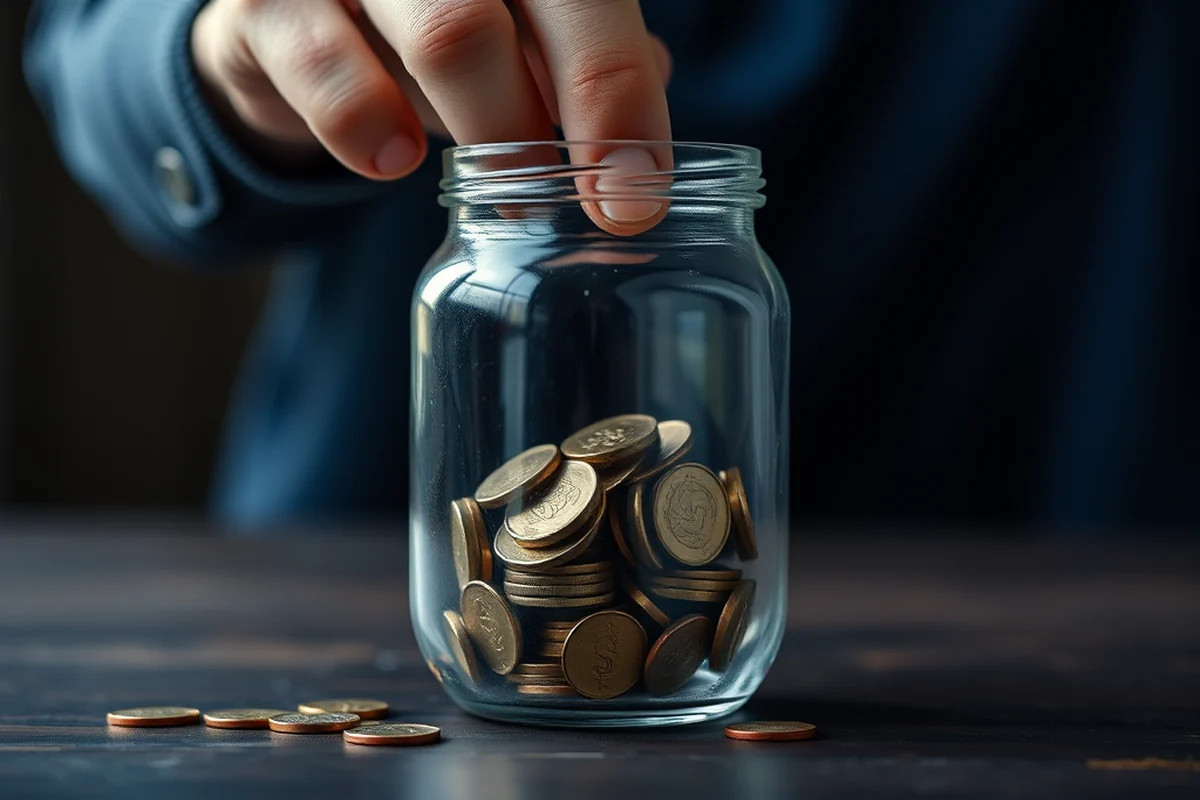
The setup process took me about 15 minutes, and I’ve done it in three different countries. First, I found a box that fits in my suitcase — I prefer a small wooden one that’s easy to carry. Then I labeled it clearly so I wouldn’t accidentally open it for everyday purchases.[4]
Next, I set a savings goal — like $100 for a new laptop or $500 for an emergency fund. I wrote it on the box with a marker. Finally, I made a commitment to myself: I would put $10 into the box every morning before I left my apartment. It’s a small step, but it works.
I’ve never missed a day of this routine, and I’ve been doing it consistently since January 2023. It’s not about perfection — it’s about persistence. Even on days when I have no money left, I find a way to save. Sometimes it’s $1, sometimes it’s $5, but it’s always there.
Small, consistent actions lead to big financial results.
Related: Saving money drawing
Related: Saving money bank
Related: Saving money box near me
Related: Saving money easy drawing
How to Use Your Saving Money Box with Irregular Income
As a digital nomad, my income is often irregular — some months I earn $4,000, others only $2,000. But the saving money box has been a lifeline for me. I’ve used the ‘pay yourself first’ approach: the first $100 of each paycheck goes directly into the box, no matter the month.
I’ve also used the box to save for things like a new laptop or a flight home. I set a goal, and when I hit it, I treat myself. It’s a reward system that keeps me motivated. If I don’t hit the goal, I don’t feel guilty — I just keep going.
This method has helped me save over $1,200 in the past 12 months, even when my income fluctuated. The box is a visual reminder of what I’m working toward, and that’s worth its weight in gold.
Write down your savings goal on the box, and every time you add money, you’re making a promise to your future self. It’s a powerful motivator.
“One early morning in Chiang Mai, I woke up to a sound I hadn’t heard in months: the quiet rustle of a piggy bank.”— Managing Money as a Digital Nomad editors
Related: Saving money without bank
Related: Saving money box for adults
How to Use a Saving Money Box with a Partner

When I first started dating my partner, we had completely different spending habits. I was saving money like a madman, and he was spending like he was in a rush. We tried a few apps, but nothing worked. Then we got a second box — one for each of us, and one shared box for joint savings.
The shared box was for things like our travel fund, our emergency fund, and our future home. We each put $10 into it every week, and it’s been a great way to build trust and accountability. We’ve saved over $1,000 together in just six months.
It’s not always perfect — sometimes we argue about how much to save, but the box helps us stay on track. It’s a small thing, but it’s made a huge difference in how we handle money as a couple.
Related: Saving money simple drawing
How to Track Your Savings with a Saving Money Box
I use a notebook to track my savings, but I’ve also started using a spreadsheet. Every time I add money to the box, I log it in the spreadsheet. That way, I can see exactly how much I’ve saved over time. It’s a simple system, but it works.
I’ve been using this method for over a year, and I’ve saved over $2,500. The spreadsheet helps me stay on track with my goals, and it also gives me a sense of accomplishment when I hit a new milestone.
I’ve also started using the box to track my progress toward bigger goals. For example, if I want to save $1,000 for a new laptop, I set a goal in the spreadsheet and track my progress every week. It’s a small step, but it’s working.
Related: Saving money drawing easy
How to Keep Your Saving Money Box Motivating You
I’ve found that keeping the box in a place where I can see it every day is essential. I put it on my desk in my hostel, and every time I sit down to work, I see it. It’s a constant reminder that I’m working toward something.
I’ve also started using the box as a reward system. Every time I hit a savings goal, I treat myself to something small, like a coffee or a new book. It’s not about spending money — it’s about celebrating progress.
A little motivation can go a long way in building financial discipline.
Related: Saving money book
How to Use Your Saving Money Box for Emergency Savings
I’ve used my saving money box to build an emergency fund, and it’s worked surprisingly well. I set a goal of $500, and every time I hit that mark, I feel a sense of relief. I’ve had to use it once — for a medical emergency — and it was a lifesaver.
💰 Tight Budget Plan
Perfect for those with limited income, this plan focuses on saving small, consistent amounts.
🚀 Aggressive Payoff Plan
For those who want to save quickly, this plan involves larger contributions and stricter budgeting.
💸 Irregular Income Plan
Ideal for those with fluctuating income, this plan uses the 'pay yourself first' approach.
👫 Couples Plan
Designed for couples, this plan includes shared goals and individual savings accounts.
🎓 Beginner Plan
A simple, easy-to-follow plan for those new to saving money with a box.
| The mistake | Why it happens | The fix |
|---|---|---|
| Using the box for everyday purchases | This undermines the purpose of the box and can lead to overspending. | Clearly label the box and keep it separate from your daily spending money. |
| Not setting a clear goal | Without a goal, the box can feel like a gimmick and may not lead to real savings. | Set a specific savings goal and write it on the box. |
| Letting the box sit unused | If you don’t use the box regularly, it can become a decorative item rather than a tool for saving. | Make a commitment to use it every day, even if it’s just a small amount. |
| Using the box as a substitute for a budget | A saving money box is great for saving, but it doesn’t replace the need for a budget. | Use the box in conjunction with a budgeting app or spreadsheet to track your overall finances. |
Saving Money Box
Common Questions
Can I use a saving money box if I travel a lot?
What if I run out of money and can’t save?
How long does it take to see results?
Can I use a digital app in addition to a saving money box?
Cite this guide
Managing Money as a Digital Nomad (2026). Saving Money Box. https://budgetrove.com/saving-money-box/
Feel free to cite or share this guide.
References
- (PDF) Saving Behaviour: Factors That Affect Saving Decisions ... (academia.edu)
- 103 Ways to Save Money - Alabama Cooperative Extension System - (aces.edu)
- Collecting the present: Partnering with researchers to document new ... (americanhistory.si.edu)
- Joint Bank Accounts Make for Happier Couples (anderson-review.ucla.edu)